From One Desk Request to an Expanding AI Research Workflow
A single shopping request became a scalable research system, showing how AI can handle data collection while humans focus on decision-making.
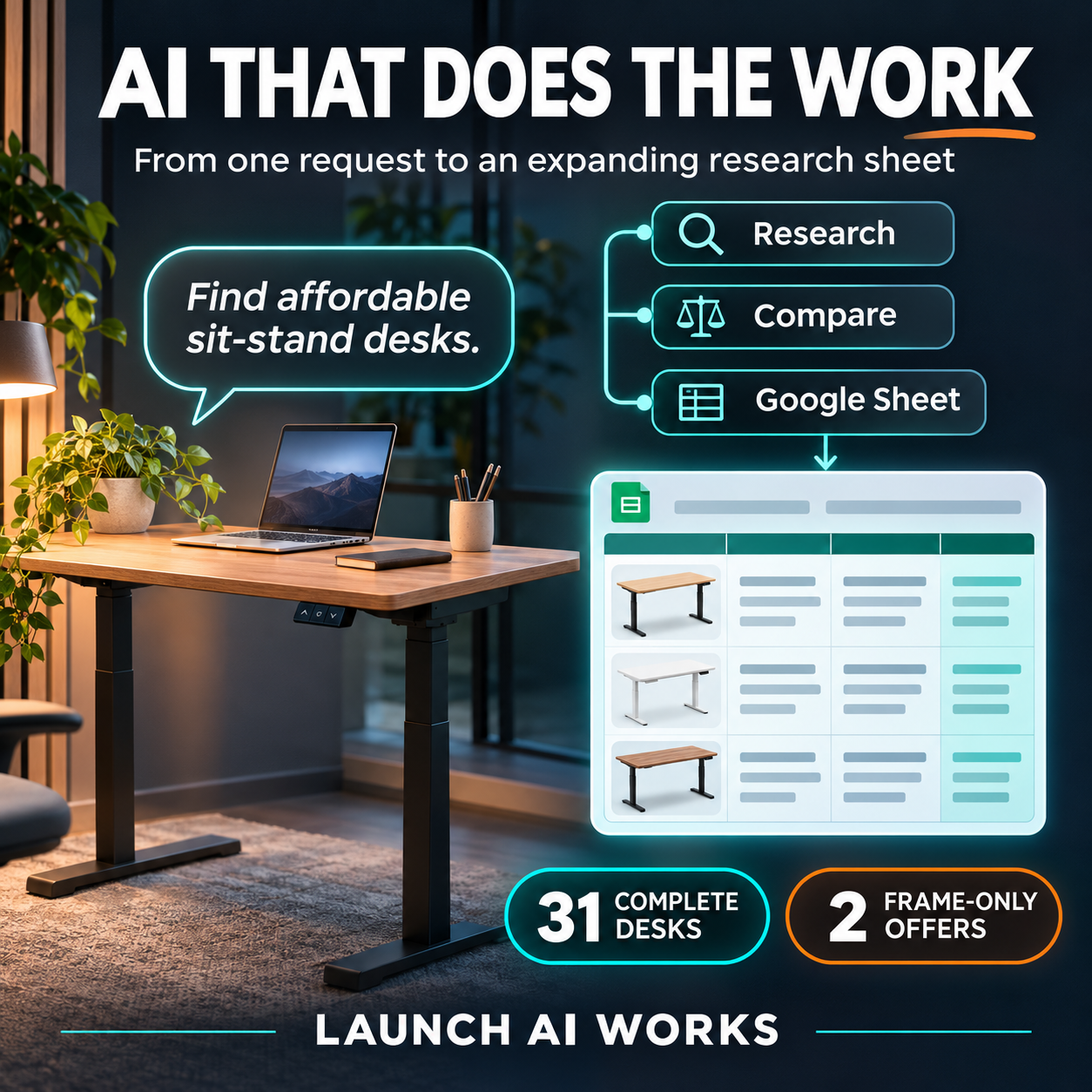
An initial request for affordable standing desks expanded from eight listings to thirty-three organized entries using AI agents. This demonstrates how small businesses can use AI to automate research and organization, leaving human time for verification and final decisions.
The Starting Point: A Simple Shopping Request
The process began with a straightforward goal: find affordable electric standing desks. The specific requirements were clear. The system needed to identify adjustable desks, compare prices, include product pictures, provide purchase links, and organize all results in a Google Drive sheet. This is a common task for many small business owners who need to make purchasing decisions quickly without spending hours manually browsing multiple retailer websites.
The initial output was modest. The first pass produced eight complete desk listings. While useful, this was just the beginning. The value of the workflow did not lie in the first eight rows of data, but in the ability to expand and refine the search automatically. The goal was not just to find a desk, but to create a repeatable method for gathering and organizing product information.
Expanding the Workflow with AI Agents
After the initial pass, the research workflow was expanded using Hermes AI agents. This step transformed a static list into a dynamic research tool. When the Google Drive sheet was checked again, it contained 31 complete desk listings and 2 separate frame-only offers. Each entry included store names, prices, dimensions, and direct links to the products.
This expansion highlights a key capability of modern AI workflows: the ability to scale data collection without proportional increases in human effort. The agents handled the repetitive tasks of searching, extracting details, and formatting the data. For a small business, this means that a task that might take an employee several hours can be completed in a fraction of the time, with the results organized in a consistent format ready for review.
The specific data points collected included prices ranging from $82.90 to $249.99, various desk sizes from 32×19 inches to 63×28 inches, and details such as load capacities and preset memory features. The organization of this data allows for quick comparison of options based on specific criteria like budget, space constraints, or desired features.
The Human Role: Verification and Decision Making
A critical part of this workflow is the human review step. The AI handles the research and organization, but humans must verify prices, availability, photos, and product details before making a purchase. This division of labor is essential. AI can process large amounts of data quickly, but it cannot replace the judgment required to make a final business decision.
As noted in industry discussions, AI can make everyone faster, but it also creates new bottlenecks if not managed correctly. The challenge is not just generating information, but ensuring it is accurate and relevant. By having AI handle the initial collection and organization, small business owners can spend their time on higher-value activities like evaluating options and making strategic choices.
This approach aligns with the idea that AI should handle the research and organization so people can spend more time deciding and doing. It shifts the human role from data gatherer to decision maker. This is a practical application of AI in a business context, focusing on efficiency and clarity rather than just automation for its own sake.
Implications for Small Business Operations
For small businesses, this type of workflow offers a way to compete with larger organizations that have dedicated research teams. By using AI to automate routine research tasks, small teams can access detailed, organized information that would otherwise be time-consuming to compile. This can lead to better-informed purchasing decisions and more efficient use of limited staff time.
The example of the standing desk research is a microcosm of broader applications. Whether it is vendor selection, market research, or competitive analysis, the principle remains the same: use AI to collect and organize data, and use human expertise to interpret and act on it. This model supports the growing trend of AI augmentation in the workplace, where tools are used to expand responsibilities and intensify productivity in a positive way.
Building these practical workflows requires a focus on clear goals and structured outputs. The success of the desk research project came from defining exactly what was needed: prices, links, photos, and organization. By setting these parameters, the AI could deliver results that were immediately useful. This approach can be applied to other business needs, creating a library of research workflows that support ongoing operations.
Takeaways
- AI agents can expand initial research results from a small list to a comprehensive dataset, including prices, links, and specifications.
- Human review remains essential for verifying data accuracy and making final decisions, ensuring AI handles organization while people handle judgment.
- Small businesses can leverage AI to automate routine research tasks, freeing up staff time for higher-value strategic activities.
Where would this work in your business?
Take the two-minute AI Opportunity Snapshot and we will point to where automation is most likely to pay off for you.